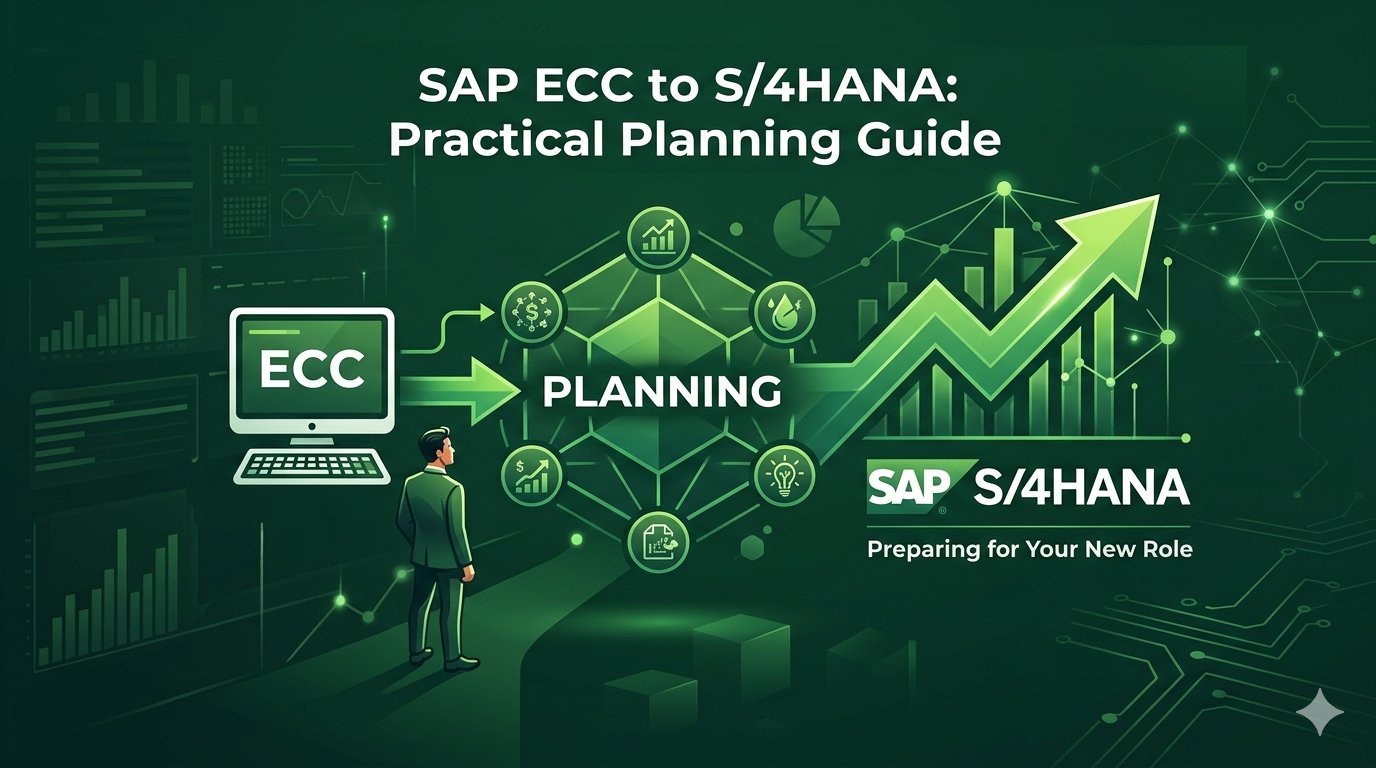
For many companies, SAP ECC has been the backbone of finance, supply chain and operations for more than a decade. It works, people know it, and changing it feels risky. But SAP has announced the end of mainstream maintenance for ECC in 2027, with optional extended maintenance until 2030. The move to SAP S/4HANA is now a question of when, not if.
The good news is that a well-planned migration is also a chance to simplify processes, clean up years of data and give your teams real-time insight. Here is how we approach it at Data ETL.
Why S/4HANA is more than an upgrade
S/4HANA runs on SAP HANA, an in-memory database. That changes how the system works day to day:
- Real-time reporting. Finance and operations see live numbers instead of waiting for overnight jobs.
- A simpler data model. Fewer tables and less duplication mean faster processing and easier reporting.
- A modern user experience. SAP Fiori apps work on laptops, tablets and phones, and are role based.
- Room to grow. Extensions on SAP BTP let you add new capabilities without cluttering the core.
The three migration paths
There is no single right way to move. The best path depends on how well your current processes serve you and how much history you need to keep.
Greenfield: a fresh start
You implement S/4HANA as a new system and redesign processes around SAP best practices. It suits companies whose ECC system is heavily customized or no longer matches how the business works. It takes more change management, but you leave old workarounds behind.
Brownfield: a system conversion
You convert your existing ECC system to S/4HANA, keeping configuration and historical data. It is usually the fastest route when your processes work well, and you can modernize step by step after go-live.
Selective data transition
A middle path. You choose which processes to keep, which to redesign and how much history to move. It is a good fit for mergers, company code changes or businesses that want both speed and transformation.
Five steps to prepare before you start
- Run a readiness check. Understand your custom code, add-ons and the simplification items that affect you.
- Build the business case. Tie the project to outcomes such as faster closing, better inventory visibility or lower IT cost.
- Clean your data early. Archive what you do not need and fix master data quality before migration, not during it.
- Plan for people, not just systems. Identify key users, plan training and communicate what will change.
- Choose your cloud model. Decide between on-premise, private cloud or RISE with SAP based on control, cost and speed.
How Data ETL keeps migrations on track
We follow SAP Activate, SAP's own methodology, through six phases: Discover, Prepare, Explore, Realize, Deploy and Run. Every phase has clear deliverables and quality gates, and we deliver in short sprints so you see working results early.
The most successful migrations we see are the ones where the business, not just IT, owns the change.
Because our consultants also run SAP training, your users and key users are prepared before go-live, not after it.
Ready to plan your move?
Whether you are just starting to think about S/4HANA or already have a date in mind, a readiness assessment is the best first step. Talk to our SAP team and we will help you choose the right path for your business.